The question behind every controversy
At first, the controversies around Witness Lee can look like separate stories: a failed motor-home venture involving his son, reports of misconduct inside Living Stream Ministry ↗, elders pushed aside, lawsuits against critics, and teachings that treated the rest of organized Christianity as fallen. But one question runs through all of them. What happened when someone tried to correct the man and ministry at the center of the Recovery?
Start with authority. Could local elders challenge Lee and remain trusted? Could a believer reject his interpretation without being treated as negative or divisive? When conscience and the ministry pointed in different directions, which one was expected to yield?
Many people were drawn in by prayer, Scripture, consecration, the indwelling Spirit, and a serious church life. Some still remember those parts warmly. But those familiar Christian practices came inside a system built around Lee’s ministry, and separating one from the other was not always possible.
Those themes came with a specific set of claims. God has a Recovery. The Recovery has a unique ministry. That ministry came through Watchman Nee and Witness Lee. The churches should remain in its fellowship. Scripture was read through the ministry’s framework, consecration could become consecration to the Recovery, and spiritual seriousness could be measured by alignment with the ministry. The apparent help and the institutional dependence were not always separate experiences.
The same structure appears throughout the history. Concerns about Lee’s sons became tests of loyalty. The Anaheim disagreement spread across the Recovery. Leaving could feel like abandoning God’s present work. Again and again, the ministry had the power to define truth, loyalty, and the limits of acceptable disagreement.
Does reading about a leader’s sin defile you?
Members who find sites like this are often told, in the language of Numbers 19 or what Local Church culture calls negative speaking, that reading criticism of the ministry exposes them to death, even when the account may be true. Lee’s Life-study of Numbers says the impurity there “does not refer to sin but to death,” and treats it as spiritual flatness in a meeting rather than as defilement from reading documented history. He never applies the type to outside publications in those messages, yet that is often how the warning works in practice.
In practice, members learn that documented criticism of Witness Lee, Living Stream Ministry ↗, or the Recovery counts as contact with death or negative speaking, even when the account is accurate. Living Stream Ministry ↗’s overseeing brothers have warned the saints that dissenting materials carry “spiritual poison” and urged them not to “touch death” (Numbers 19). Witness Lee taught that dissenters aim to “poison the saints” and that talking with them brings unavoidable “contamination by their poison.” Lee never drew that line in his Numbers messages; the warnings come from LSM and the blended co-workers who carry his ministry today. Scripture would bring such matters into the light; this rhetoric often keeps members from reading them at all.
Against that instinct, the Bible is the least whitewashed leadership record in ancient literature. David’s adultery and his arrangement of Uriah’s death (2 Samuel 11), Peter’s public rebuke by Paul at Antioch (Galatians 2:11), and Eli’s failure with his sons (1 Samuel 3:13) are all right there in Scripture; knowing about a leader’s sin is not treated as defilement. The New Testament reads the Numbers ritual of touching a corpse through Hebrews as cleansing from dead works, participation in sin that leads to death, not as discovering that a leader sinned (Hebrews 9:13-14). Paul tells the church to expose the works of darkness (Ephesians 5:11) and to examine accusations against elders on evidence (1 Timothy 5:19-20).
Jesus turned the imagery of hidden death against the people doing the hiding. Tombs were whitewashed so that passers-by would notice them and avoid the defilement inside. When he called the scribes and Pharisees whitewashed tombs (Matthew 23:27-28), the whitewash itself became the charge: the outward beauty is what conceals the bones. He also said he taught nothing in secret (John 18:20). A leadership that hides its own record from the people it teaches looks outwardly clean while keeping death inside.
The passages below quote each reference in full.
Philip Lee shows the same pattern. Reports of misconduct had circulated among elders for years before Anaheim announced public discipline in 1988, but the case stayed among leaders close to the family, and in 1993 a new group of Anaheim elders lifted the discipline and apologized to him. No available source describes an outside investigation. Most members never hear such accounts because elders and co-workers tell them that reading criticism is poison or contact with death, not because Numbers 19 treats the knowledge as defilement. The one-publication policy described in the next section reinforces that instinct in print, but the poison-and-death warnings are what members usually hear first.
13For if the blood of bulls and goats and the ashes of a heifer, sprinkling the unclean, sanctifies for the purifying of the flesh,
14how much more shall the blood of Christ, who through the eternal Spirit offered Himself without spot to God, cleanse your conscience from dead works to serve the living God?
This is the New Testament interpreting Numbers 19 directly. The ashes of the heifer were the remedy for contact with a corpse, and Hebrews carries that ritual over to cleansing the conscience from dead works. The type lands on participation in sin, not on knowledge of it.
11And have no fellowship with the unfruitful works of darkness, but rather expose them.
Paul does not tell believers to avoid learning what darkness did. He tells them not to participate in it, and to bring it into the light. Reading a documented account of wrongdoing is not fellowship with darkness.
27Woe to you, scribes and Pharisees, hypocrites! For you are like whitewashed tombs which indeed appear beautiful outwardly, but inside are full of dead men’s bones and all uncleanness.
28Even so you also outwardly appear righteous to men, but inside you are full of hypocrisy and lawlessness.
Whitewashing a tomb was a public service: it warned people away so they would not be defiled unawares. Jesus keeps the death-defilement imagery but assigns it to the religious leaders themselves. The whitewash becomes the charge, and concealment is what contaminates. A leadership that hides its record from those it teaches looks clean on the outside while keeping death inside.
20Jesus answered him, “I spoke openly to the world. I always taught in synagogues and in the temple, where the Jews always meet, and in secret I have said nothing.
Jesus says this under interrogation, about his own teaching and conduct. A ministry that cannot survive its members reading the record of what it did is claiming a privacy its Lord declined.
19Do not receive an accusation against an elder except from two or three witnesses.
20Those who are sinning rebuke in the presence of all, that the rest also may fear.
Paul gives the protection and the exposure in consecutive sentences. The witness requirement guards a leader against rumor. The open reproof guards the church against a leader whose failures are handled quietly among friends.
One ministry and one publication
Lee said, “Our sounding must be one,” and taught that workers should be restricted to one publication. Living Stream Ministry ↗ still explains the principle plainly: one publication safeguards “the unique ministry in the Lord’s recovery.”
Living Stream Ministry ↗ states the principle in its own words. It also says one publication is not an item of the common faith and should not determine whether another Christian is accepted. Former members did not invent either statement.
Once independent teaching is treated as a threat to the oneness of the Body, ordinary disagreement can start to look like spiritual rebellion.
Witness Lee’s personal authority
LSM preserves a striking statement from Lee: “I am the continuation of Brother Nee; I would like to have a continuation of me.” He connected that continuation to Living Stream Ministry ↗ and the continuation of the ministry.
Lee went beyond preserving an admired teacher’s books. The institution describes a ministry that passed from Nee to Lee and then to a group of designated coworkers. Critics hear a succession of special spiritual authority. Defenders hear a responsible continuation of one body of teaching.
The minister of the age
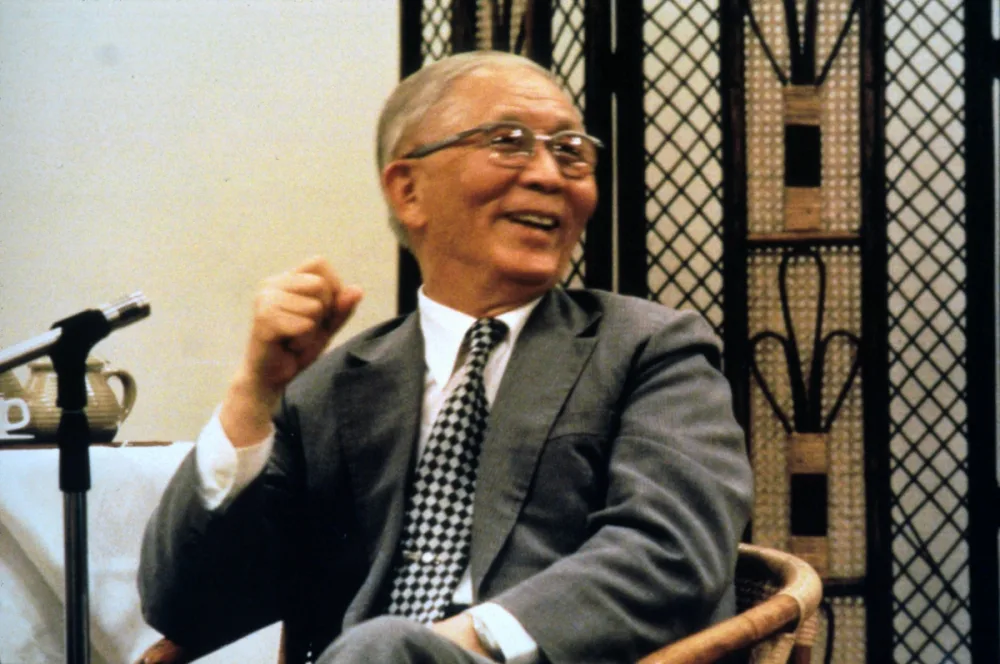
The Recovery uses three linked expressions. The vision of the age is God’s present recovery of biblical truth. The ministry of the age carries out that vision. The minister of the age is the person through whom God releases the vision and leads the work. LSM sources identify Watchman Nee and Witness Lee as those ministers in the twentieth century.
Lee’s claim went beyond saying that some teachers are especially influential. In his 1986 fellowship, he spoke of one blueprint and one master builder in an age. He said that useful light in other workers’ messages came from this ministry and that other portions contained no revelation or vision. An LSM defense still presents this as the proper pattern while insisting that believers follow the vision, not a man.
If God’s current vision comes through one minister and one ministry, the one-publication policy is the predictable result. Independent teaching can seem spiritually unsafe even when it is grounded in Scripture. The dispute is whether one channel should control what churches may hear, publish, or question.
The local church and the cost of leaving
Lee taught that there should be one practical expression of the church in each city. Local congregations therefore used names such as “the church in Anaheim” as a theological claim, not simply as a convenient name.
Combined with the idea that the Recovery uniquely practices God’s pattern, this can make leaving feel like more than changing churches. A person may fear that he or she is leaving God’s recovered church. That is one reason critics describe the Recovery as high control.
Christians, Christianity, and Babylon
Lee made a sharp distinction between Christians and the organizations to which they belonged. He acknowledged real, saved Christians in every denomination, including Roman Catholicism. At the same time, he said denominational organizations were not of God, had been used by Satan, and would issue in Babylon. He also declared Christianity, Christendom, Catholicism, and all denominations fallen.
Lee was not calling every Baptist, Presbyterian, or Catholic unsaved. He was calling their church systems improper expressions of the church. His one-city, one-church teaching then placed the Local Churches outside those systems as the recovered ground.
This can be inclusive at the level of individual salvation and exclusive at the level of church identity. A member could love Christians elsewhere while believing their congregations belonged to a fallen system. CRI later defended the distinction as part of Lee’s protest against Christian division, but acknowledged why the language sounds elitist and calls every other congregation’s standing into question.
Litigation, open letters, and reassessment
The legal history does not point in only one direction. The Local Church won a large 1985 libel judgment concerning The God-Men, and Thomas Nelson retracted the Local Church chapter of The Mindbenders. Two decades later, however, its defamation case against Harvest House ended with a take-nothing judgment.
The courts did not decide whether Lee’s theology was true, whether the Recovery was healthy, or whether every statement in the disputed books was accurate. The outcomes addressed particular publications and particular rules of defamation. Each judgment should be described for what it actually decided.
Thomas Nelson retracts The Mindbenders chapter
The publisher withdrew the chapter concerning Witness Lee and the Local Churches and apologized for false and defamatory statements. The retraction is an important reason not to repeat early countercult allegations uncritically.
Formal retractionThe Local Church wins The God-Men judgment
A California court awarded a large libel judgment after an uncontested five-day trial in which none of the defendants appeared. The judge found substantial portions of The God-Men false and defamatory based on testimony from the plaintiffs’ witnesses and depositions from the defendants. Contemporary reporting also describes the financial strain the litigation placed on the Spiritual Counterfeits Project.
Court judgment and reportingA new publishing dispute leads to another lawsuit
After Harvest House published Encyclopedia of Cults and New Religions with a short entry on the Local Church, Living Stream Ministry ↗ and numerous local churches filed a large defamation claim in Texas. They argued that the book’s general discussion of criminal and abusive conduct would be understood to apply to them.
Litigation recordTexas appellate court rules for Harvest House
The court held that the challenged introduction and appendix did not accuse every group in the book of the crimes discussed there. It reversed the lower court and rendered judgment that the Local Church plaintiffs take nothing. The court did not decide the truth of Lee’s theology.
Appellate decisionFuller Seminary reports a favorable assessment
After two years of dialogue, a Fuller faculty panel said the teachings it examined represented genuine historic Christian faith in essential respects. The statement did not address every governance allegation or every interpretation of Lee’s writings.
Institutional assessmentTexas Supreme Court declines review
The Texas Supreme Court denied the Local Church petition for review. That left the appellate ruling in place without creating a new finding that the disputed religious or factual claims were true.
Review deniedEvangelical leaders publish an open letter
Dozens of evangelical scholars and ministers asked LSM to disavow statements about the Trinity, deification, Christianity, and denominations, and to stop using litigation to answer religious criticism. LSM replied that the quotations had been isolated from their biblical and literary context.
Public disputeThe United States Supreme Court declines review
The Supreme Court denied the Local Church petition without deciding the merits. That left the Texas appellate judgment in place and ended the Harvest House case.
Supreme Court docketA senior CRI executive begins attending a Local Church
Paul Young, CRI’s executive vice president, COO, and board secretary, says Local Church leaders invited CRI staff to a conference in Jacksonville. He says the experience moved him to seek out the church in Charlotte and that he became personally connected with the Recovery.
First-person institutional accountChristian Research Institute publishes “We Were Wrong”
After a six-year reinvestigation, CRI reversed its earlier classification and defended the Recovery’s essential orthodoxy. The full special issue does not identify Morningside, the Chan brothers, or financial support from them.
Research reassessmentMorningside Foundation gives CRI $625,000
The foundation’s tax filings list $200,000 to CRI in 2009 and $425,000 in 2010. The same filings list grants to Local Church congregations and Living Stream Ministry ↗. Ronnie and Gerald Chan are listed as foundation directors, and LSM records identify Ronnie as a participant in coworker affairs.
Primary financial recordCRI’s financial relationship with Morningside
The Morningside Foundation’s tax filings list a $200,000 grant to the Christian Research Institute in 2009 and another $425,000 in 2010. CRI therefore received $625,000 from Morningside during the publication year of its favorable reassessment and the year that followed.
The source of the money is the point. The filings list Ronnie Chan and Gerald Chan as Morningside directors. The 2009 grant schedule also lists $170,500 to the church in Anaheim, $106,560 to the church in Cambridge, and $450,000 to the church in Fullerton. The 2010 schedule lists $200,000 to Living Stream Ministry ↗. An LSM-aligned history calls Ronnie “Brother Ronnie Chan” and records his involvement in a dispute among the Recovery’s coworkers. This was not an unrelated foundation that happened to support CRI.
The timing creates a serious potential conflict of interest that readers deserve to know about. CRI published its favorable special issue in the 2009 volume year after a six-year project. Its issue says that CRI’s stance had compromised support, but it does not name Morningside, the Chans, or these grants. CRI executive Paul Young also says that he began attending the church in Charlotte after a 2008 LSM conference and became personally connected with the Local Churches.
The grants do not decide whether CRI’s theological conclusions were right or wrong. They bear on the independence of the reassessment. A publication defending an organization should disclose substantial support from a foundation directed by people connected to that organization, especially when the same foundation is funding that organization’s churches and publishing ministry.
What we think the evidence supports
Calling Witness Lee orthodox is too simple. Some of his statements overlap with familiar evangelical language; his teachings on the Trinity, salvation, and the millennial kingdom are unusual and disputed. The theology section later on this page examines them in his own words.
The leadership questions remain serious in their own right. Who could disagree with the ministry? Who could correct the leader? What happened to people who raised concerns? Could members leave without feeling that they had left God’s present move?